
-
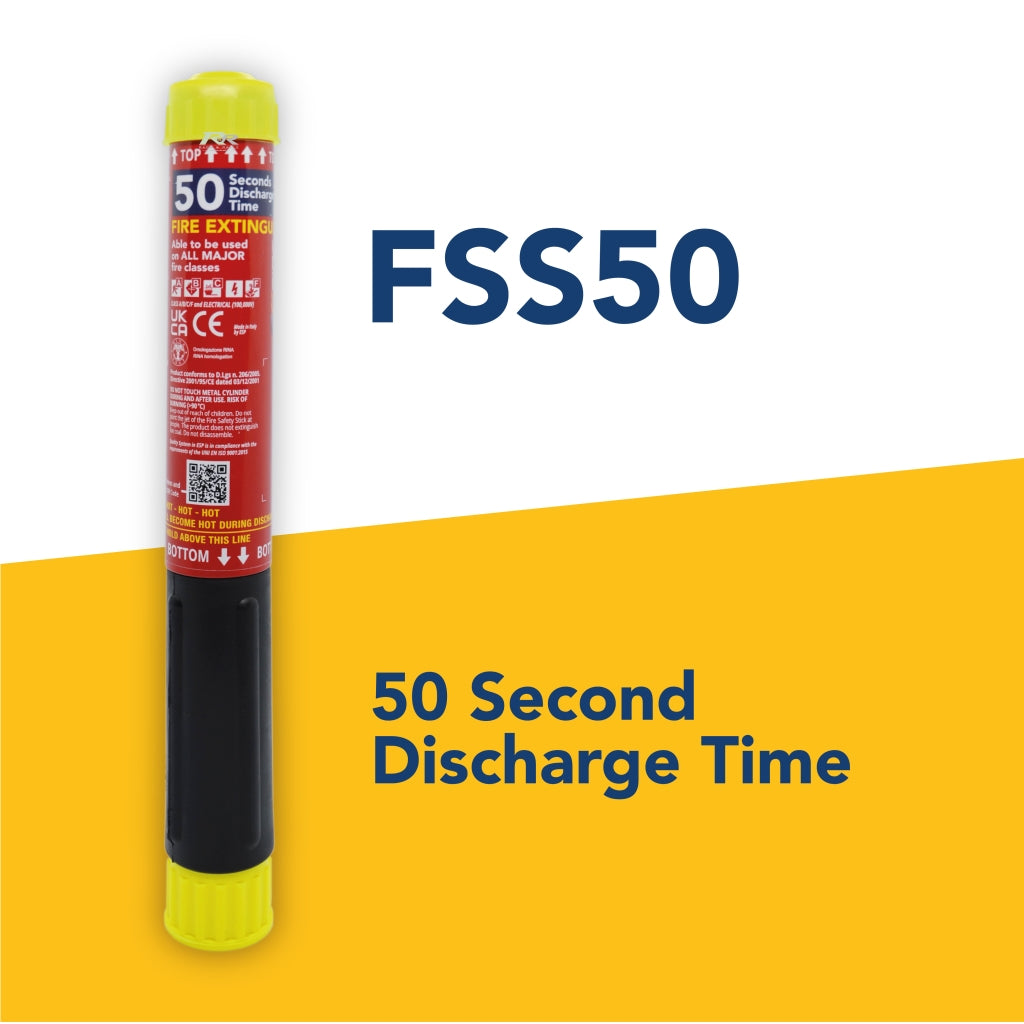
Fire Safety Stick - 50 Seconds
Unit price perRegular price €70.00 €86.10 -
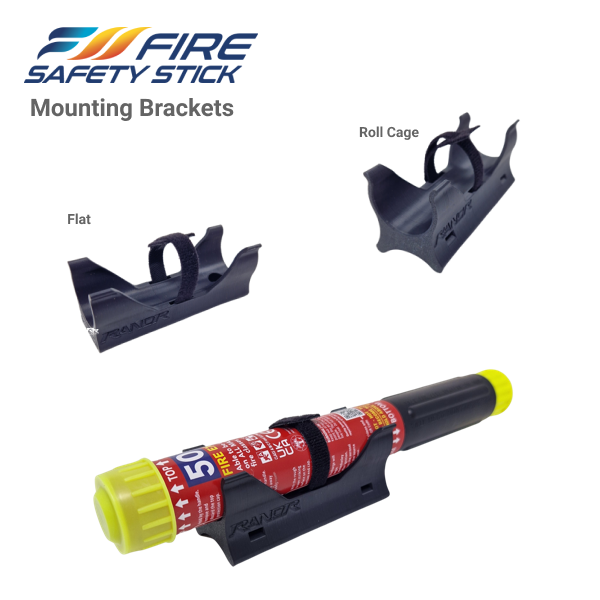
Fire Safety Stick Mounting Brackets
Unit price perRegular price €19.49 €23.97 -
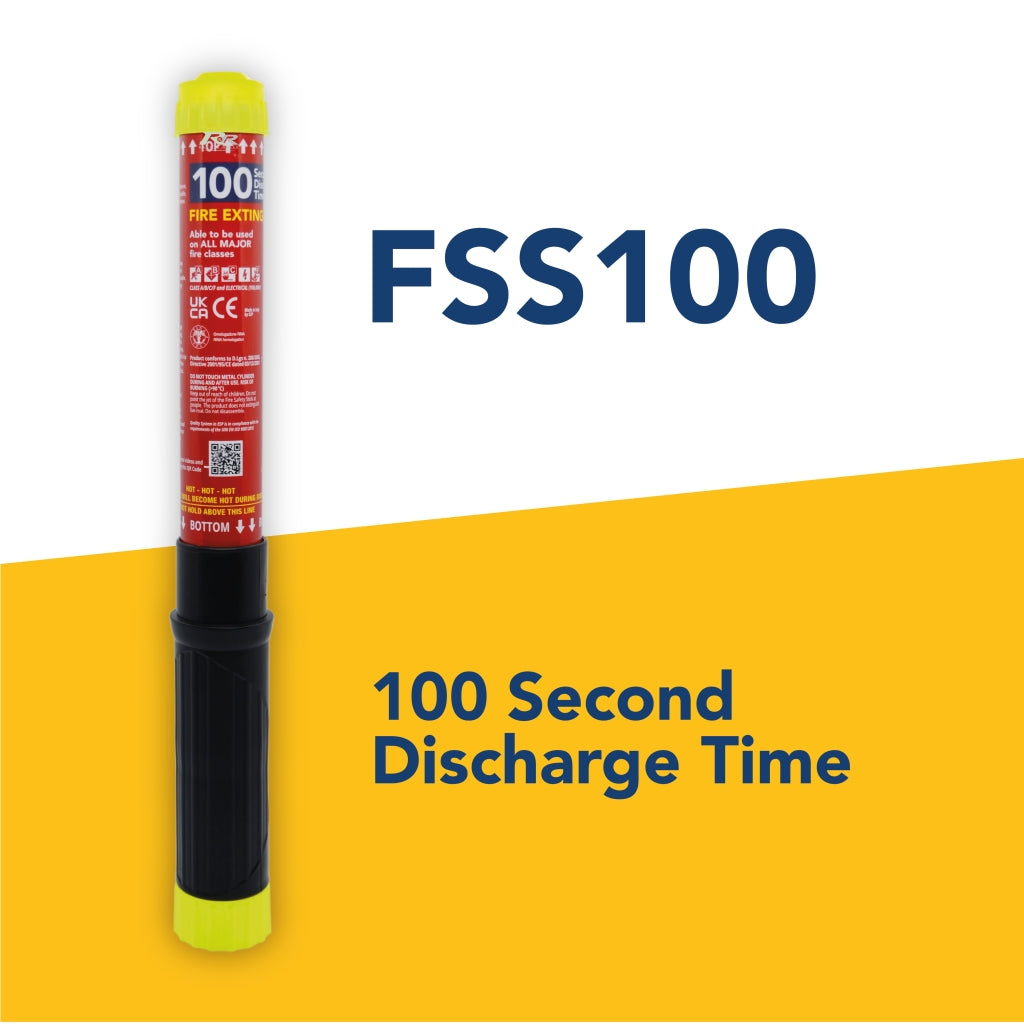
Fire Safety Stick - 100 Seconds
Unit price perRegular price €97.50 €119.93 -
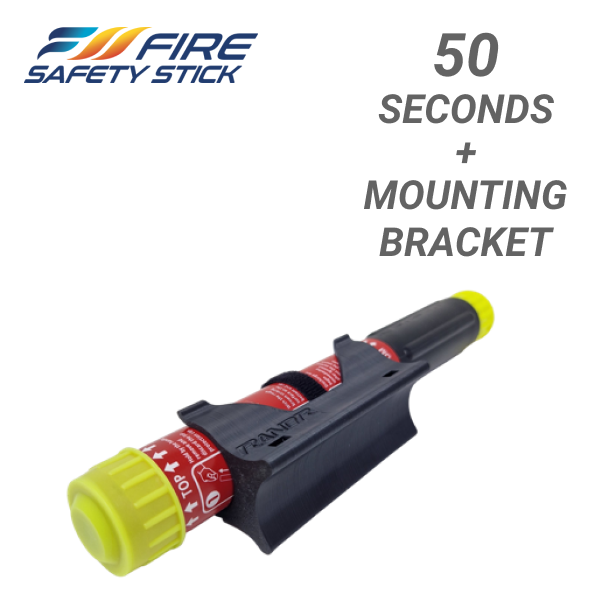
50 Second Fire Safety Stick & Bracket Bundle
Unit price perRegular price€103.70€127.55Sale price €89.45 €110.02Sale -
100 Second Fire Safety Stick & Bracket Bundle
Unit price perRegular price€121.05€148.89Sale price €113.30 €139.36Sale
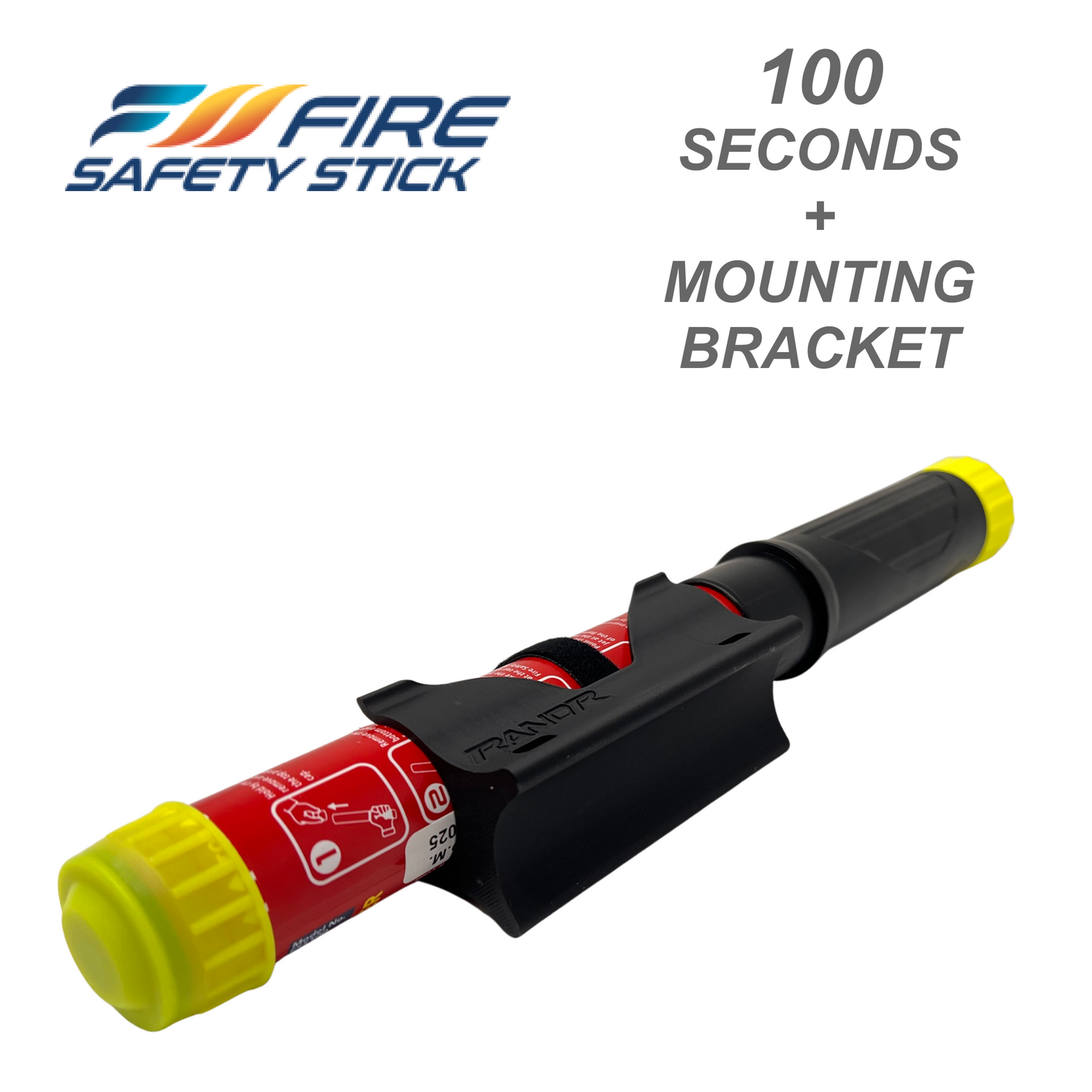
Why Choose the Fire Safety Stick?
Traditional fire extinguishers are bulky, need professional servicing, and leave a mess that can cause as much damage as the fire itself. The Fire Safety Stick is different.
It's compact enough to store in a rally car cockpit, caravan or your glove box, requires zero maintenance, and extinguishes flames without residue, without removing oxygen from the environment, and without collateral damage to electronics or property.
Whether you're fitting out a competition car, keeping one in your road vehicle, or placing one somewhere easily accessible at home, it's one of the simplest and most effective ways to be prepared for a fire emergency.
How Does It Work?
Unlike pressurised containers, the Fire Safety Stick uses a potassium-based aerosol. This is a unique method that interrupts the fire's chain reaction at its core rather than smothering it with foam or powder. There are no moving parts and no pressurised gas. Remove both caps, strike the base cap on the top of the fire safety stick and direct it at the fire.
It works on all major fire types:
(Class A): solid materials like wood and paper
(Class B): flammable liquids including petrol and diesel
(Class C): flammable gases
(Class E): electrical equipment up to 100,000V
(Class F): cooking oils
Because it leaves no mess and doesn't deplete oxygen, it's particularly suitable for enclosed fires in cockpits, caravans, boats, and kitchens where typical extinguisher residue would cause significant secondary damage.
50 Second vs 100 Second: Which Do You Need?
We stock two models:
-
50 Second (FSS50): the smaller, lighter option. A solid choice as a secondary extinguisher, for smaller vehicles, or as a backup at home or on a boat.
-
100 Second (FSS100): Double the duration, giving you significantly more time to safely tackle a larger fire. Ideal for rally and race cars, workshops, and anywhere you need maximum coverage.
Both models share the same diameter and fit the same mounting brackets. If you're unsure which to go for, the 100 second model offers the most confidence in an emergency.
Mounting Brackets and Bundles
Every Fire Safety Stick should be securely mounted and kept in an easy access location, especially in a competition car where it must stay in place under impact.
-
Roll Cage Bracket: clamps directly onto roll cage tubing; the most popular choice for rally and race cars
-
Flat Bracket: bolts to any flat surface; suits road cars, vans, caravans, boats, and workshop walls
-
Bundle Deals: stick and bracket together at a saving; available for both models with either bracket type
Frequently Asked Questions
Do fire safety sticks actually work?
Yes. The Fire Safety Stick is tested and certified across fire Classes A, B, C, E, and F. It works by interrupting the fire's chemical chain reaction using a potassium aerosol rather than smothering it with foam or powder. It won't tackle a fully developed structural fire, but it's highly effective in the early stages, which is when it counts most.
What's the difference between a Fire Safety Stick and a traditional extinguisher?
Traditional extinguishers use pressurised foam, powder, or CO2 and need servicing every one to two years. The Fire Safety Stick is non-pressurised, requires no maintenance, and leaves no residue, so there's no cleanup after use. The trade-off is capacity: a traditional extinguisher holds more suppressant, but for vehicles, boats, and small spaces, the Fire Safety Stick is far more practical.
How long does a Fire Safety Stick last before it expires?
The Fire Safety Stick requires no servicing, no pressure testing, and no refills during its shelf life, which is 10 years, making it significantly cheaper to own over time compared to a traditional extinguisher. Check the expiry date on your unit. We'd recommend noting it when you fit or store it so it doesn't get overlooked.
Is the Fire Safety Stick legal for motorsport use?
It's not a replacement for a plumbed-in FIA-homologated fire suppression system, which is mandatory in most competition classes. It is, however, an excellent supplementary handheld option for the cockpit, service vehicle, or paddock. Many rally crews carry one as an additional safety measure alongside their mandatory system.